
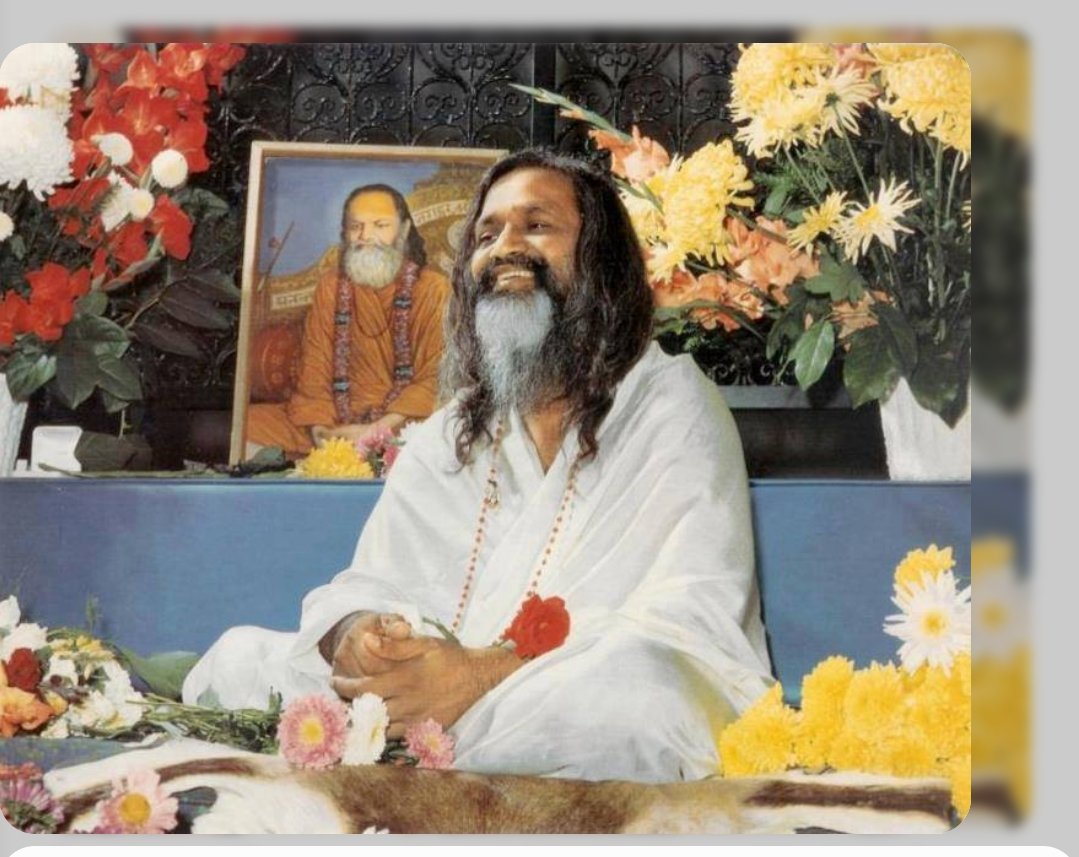
Maharishi Mahesh Yogi, born Mahesh Prasad Varma on January 12, 1918, in Jabalpur, India, stands as one of the most transformative spiritual figures of the modern era. While some historical accounts suggest minor variations in the birth year (such as 1911 or 1917), 1918 remains the widely accepted date, consistent with his official records. Born into a Kayastha family with a tradition of scholarship and scribal work, he grew up deeply immersed in India’s rich cultural and spiritual heritage. Even in childhood, he displayed an exceptional curiosity for intellectual and philosophical exploration.
After completing his degree in physics at Allahabad University in 1942, Maharishi’s life took a decisive turn. In 1941, he had already become a devoted disciple of Swami Brahmananda Saraswati—revered as Guru Dev and the Shankaracharya of Jyotir Math in the Himalayas. For more than a decade, until Guru Dev’s passing in 1953, Maharishi served with complete dedication. He managed administrative duties, delivered eloquent public talks on Vedic philosophy, and absorbed the deepest layers of ancient wisdom. Although his non-Brahmin background barred him from succeeding Guru Dev as Shankaracharya, his master entrusted him with a sacred responsibility: to bring the transformative practice of meditation to the widest possible audience around the globe.
In 1955, Maharishi began publicly teaching what he initially named Transcendental Deep Meditation, later simplified to Transcendental Meditation (TM)—a gentle, effortless, mantra-based technique that allows the mind to settle naturally beyond ordinary thinking and experience profound levels of pure consciousness. Deeply rooted in the Vedic tradition he received from Guru Dev, the practice was carefully adapted to suit modern lifestyles, requiring neither renunciation nor major changes in daily routine. In 1957, he founded the Spiritual Regeneration Movement in Madras, formally launching his worldwide mission. His first international tour in 1959 took him across Asia and to the United States, where he established meditation centers and began systematically training teachers. From these humble beginnings grew an extraordinary global movement: Maharishi personally instructed millions of people and certified more than 40,000 TM teachers.
At the very heart of Maharishi’s philosophy lies the luminous declaration that the purpose of life is the expansion of happiness. He taught that human existence is not meant to be a struggle against inevitable suffering, but rather a joyful unfolding of the infinite bliss, intelligence, and creativity already present within every individual. Rejecting the traditional view that deep spiritual experience is reserved for monks and ascetics, Maharishi made enlightenment inclusive and democratic—affirming it as the natural birthright of householders, professionals, students, and people from every walk of life. Through the regular, effortless practice of TM, individuals could integrate transcendent awareness into the flow of daily activity, fostering profound personal growth, deep stress relief, sharper mental clarity, and radiant well-being. He illuminated a clear path to higher states of consciousness—from transcendental pure awareness to cosmic consciousness—where the unchanging, eternal Self remains steady amid the ever-changing play of life. Importantly, he emphasized that this inner awakening naturally radiates outward, generating coherence in collective consciousness and laying the foundation for genuine and lasting world peace.
Three foundational aims guided Maharishi’s entire life’s work:
- to revive India’s ancient spiritual traditions in their purest and most authentic form,
- to make the effective practice of meditation universally accessible to every human being,
- to harmonize the timeless knowledge of the Vedas with the discoveries of contemporary science.
He presented TM as a precise, verifiable, scientific approach to inner development, actively encouraging independent research. Decades of studies have confirmed benefits ranging from lowered blood pressure and improved cognitive performance to broader societal effects, including reduced stress and conflict through the phenomenon known as the Maharishi Effect.
To fulfill this expansive vision, Maharishi founded a network of powerful institutions, including the global Transcendental Meditation movement, the Students’ International Meditation Society in 1966, and Maharishi International University (now Maharishi University of Management) in Fairfield, Iowa, in 1974. These organizations seamlessly integrated the daily practice of TM with education, health initiatives, and principles of effective management, pioneering a consciousness-based approach to holistic human development.
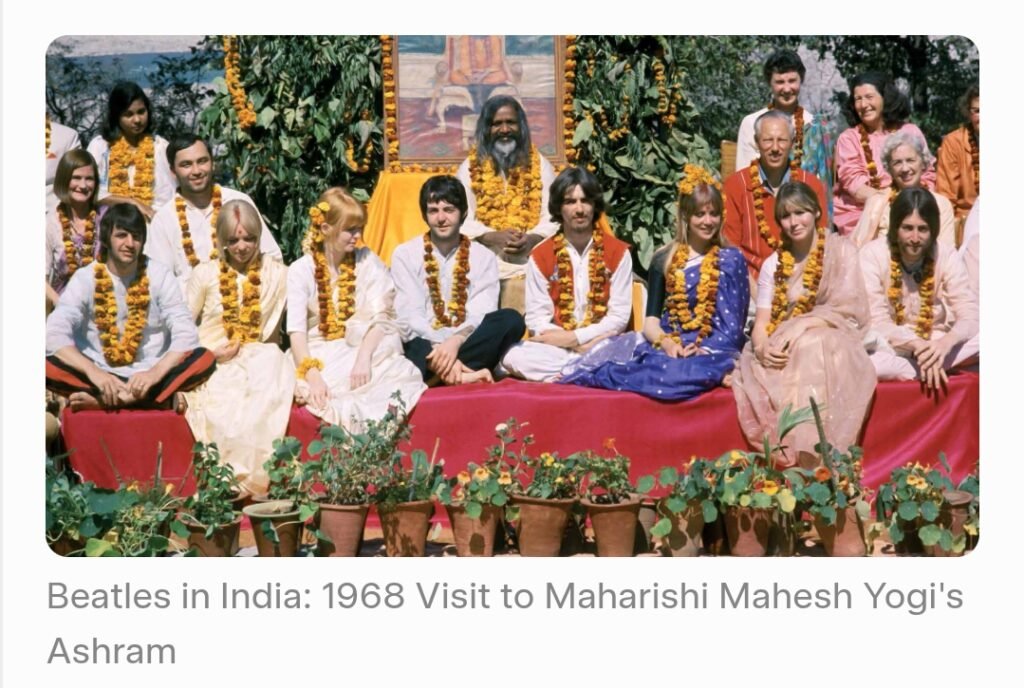
Maharishi’s influence reached far beyond spiritual circles, captivating cultural icons and igniting profound societal change. In the late 1960s, he became affectionately known as the “guru to the stars” when The Beatles, along with celebrities such as Mia Farrow and Donovan, traveled to study with him. Their famous 1968 stay at his ashram in Rishikesh, India, not only inspired several timeless Beatles songs but also propelled Transcendental Meditation into mainstream Western consciousness, drawing millions of practitioners and leaving a lasting impression on artists, filmmakers, and thought leaders including David Lynch and Oprah Winfrey.
Maharishi’s unwavering commitment to world peace found expression in bold initiatives such as the founding of the Global Country of World Peace in 2000 and the establishment of the Natural Law Party in 1992. These efforts embodied his conviction that the systematic application of Vedic principles—especially through collective meditation—could create an era free from conflict and filled with harmony, prosperity, and unity.
Even after his passing on February 5, 2008, in Vlodrop, Netherlands, Maharishi’s teachings continue to shine as a radiant source of inspiration. His legacy lives on in the effortless cultivation of divine intelligence, inner tranquility, and boundless abundance. Through Transcendental Meditation and its wide-ranging applications in education, health, and global peace-building, Maharishi proved that the most ancient Vedic wisdom not only endures but flourishes vibrantly in the modern age—nurturing a future of ever-expanding happiness, profound unity, and enduring peace for all humanity.
